



There is one thing that online retailers often underestimate.
Customers do not always want to read an article, browse a category and study a brand before reaching the product. Often, they already know what they need: a specific product, model, size or material, or at least a clear comparison by price, image and buying terms.
Google Shopping is one of the strongest channels for e-commerce.
It puts the product in front of someone who already intends to buy.
Not halfway down a social feed where the advert is easy to miss. Right inside Google's search ecosystem, when someone is actively looking for a product, comparing options and potentially ready to buy.
For an online store, that is a fundamentally stronger customer touchpoint.
Google Shopping, in plain English
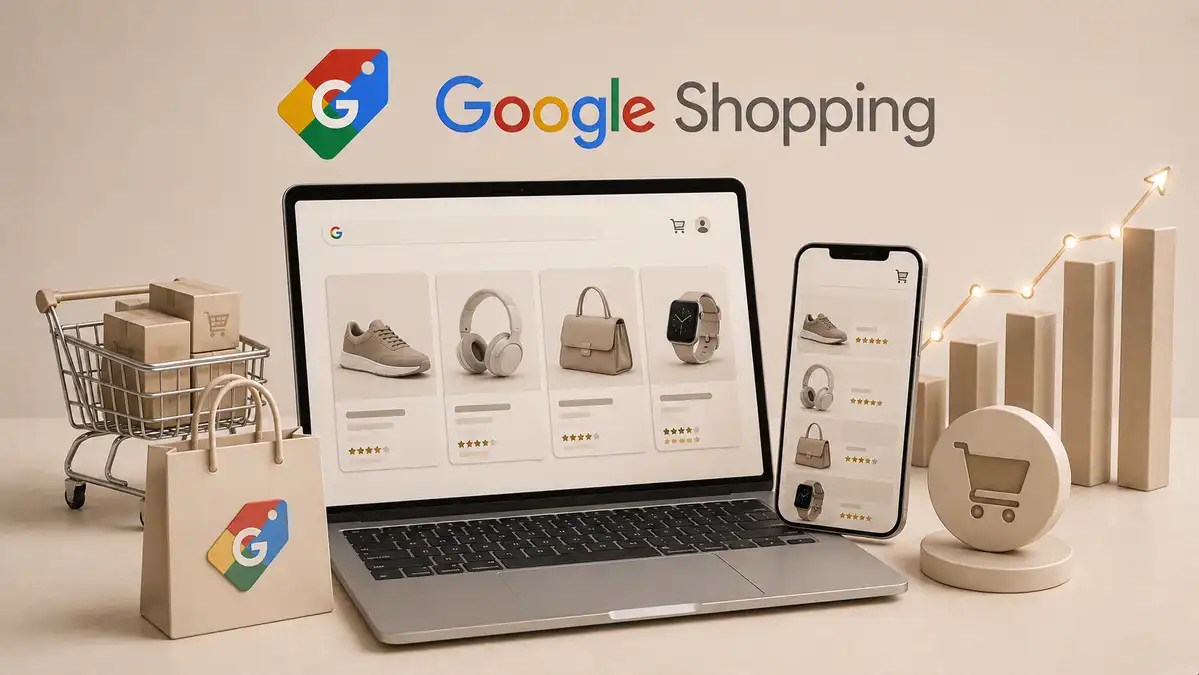
Google Shopping displays an online store’s products across Google: in Search, the Shopping tab, Images, advertising placements and other surfaces. Shoppers can see the image, price, retailer and product-page link at a glance.
Simply put, Google Shopping turns your product catalogue into structured data that Google can understand and serve.
A typical SEO page tells the search engine, “We have a page about this product.” Google Shopping says much more accurately: “Here’s a specific product, here’s its name, price, photo, availability, link, brand, category, delivery and other parameters.”
For e-commerce, this is a huge difference.
Google can then work with individual product data, not only website pages.
Why it can outperform conventional advertising
With a conventional text advert, the user must read the copy, understand the offer, visit the website and only then see the product.
Google Shopping is different.
Google Shopping shows the product immediately: image, name, price, retailer and sometimes rating, delivery and other useful details. Part of the decision happens before the website visit.
This is particularly effective when visuals, price and availability matter: furniture, fashion, automotive products, electronics, cosmetics, household products, components, accessories, children's products, sports equipment and almost any e-commerce range.
Google Shopping does not merely drive traffic. It attracts better-prepared traffic.
The shopper has already seen the product and understands roughly what to expect. A click is therefore often more deliberate than a click on a text advert.
Why Google Shopping matters for online stores in Europe
European e-commerce is fiercely competitive. Shoppers compare price, delivery, retailer credibility and checkout convenience in seconds.
For a store in Slovakia, the Czech Republic, Poland, Hungary, Austria or another European country, Google Shopping can be a channel that helps you reach beyond the usual audience.
Especially if the store sells products that people are looking for by specific characteristics: car model, material, size, colour, brand, category, taste, packaging, equipment or compatibility.
Local detail matters across Europe: language, currency, delivery, stock, legal pages, returns, taxes, Google policy compliance and data accuracy. A store selling in more than one country should treat Google Shopping as part of its e-commerce architecture, not a one-off advertising experiment.
Google Shopping, Merchant Center and Google Ads: what is the difference?
The three are often confused, but each has a distinct role.
Google Shopping is how a user sees products on Google.
Google Merchant Center is where the store submits product data and where Google checks the website, pricing, availability, delivery and policy compliance.
Google Ads is the advertising layer used to run Shopping or Performance Max campaigns from that product data.
The complete setup connects the website, product feed, Merchant Center, Google Ads and analytics.
If one element fails, the whole system suffers. Products may be disapproved, carry errors, receive few impressions, point to the wrong pages or show outdated prices and stock.
The product feed sits at the heart of the system
A product feed is a file or data source through which an online store transmits product information to Google.
It should contain names, descriptions, links, images, prices, availability, brands, identifiers, categories, delivery details and other data. It may look technical, but it is effectively the store's digital catalogue for Google.
The feed often decides whether Google will understand your products properly.
A poor feed can waste the potential of a strong store. If titles are generic, images weak, prices inconsistent, stock data stale or categories chaotic, Google may restrict visibility or reject products.
A good feed helps Google match the right product to the right search.
The lesson is simple: Google Shopping should not be rushed. Uploading products is easy; preparing data that performs takes care.
Why Google may disapprove products
Many business owners imagine the process as: upload products, switch on ads, collect sales.
In practice, a different process often begins.
Merchant Center may reject products—or suspend an account—because of website errors, inaccurate data, delivery issues, missing legal pages, price mismatches, weak images, incorrect currency, missing returns information or policy breaches.
Resolving those issues is a normal part of a professional setup.
Google protects its users. It needs confidence that the store is genuine, products are available, prices match the website, delivery is clear and shoppers will not land on a questionable page.
Therefore, connecting Google Shopping almost always requires not only setting up in Google, but also refining the online store itself.
Why Your Website Should Be Ready for Google Shopping
If the store is technically weak, Google Shopping will quickly show it.
For example, the website may have weak product pages, missing structured data, poor mobile UX, unclear delivery and returns, incorrect price display or unreliable stock logic.
For the user, this is just an inconvenience.
For Google, this is a risk signal.
A sound Google Shopping setup therefore often starts with a store audit. Product pages, data, legal information, checkout, payments, delivery, speed, responsive behaviour, analytics and Merchant Center compliance all need checking.
It's not bureaucracy.
It's the foundation of sales.
Google Shopping and SEO Work Together
Google Shopping is not a substitute for SEO. SEO does not replace Google Shopping.
These are different channels that reinforce each other.
SEO earns organic traffic through categories, product pages, articles, local pages and a strong search structure. Google Shopping gives specific products visibility in Google’s commerce formats.
If a store has a strong SEO structure, clear product cards, correct data, and good UX, Google Shopping usually gets a better foundation.
If the website is weak and product data is chaotic, advertising merely exposes the problems faster.
Why Google Shopping Can Be Especially Beneficial for Niche Stores
Google Shopping is useful for many retailers, but it can be especially powerful for niche stores.
If a store sells specialist products, accessories, components, model-specific items or products with clear search demand, Google Shopping can meet shoppers at the exact moment of intent.
For example, someone may search not simply for “car mats” but for mats for a specific make, model or material. Accurate data gives Google a better chance of showing exactly the right product.
In these niches, the winner is not necessarily the retailer with the biggest advertising budget. It is often the one with cleaner data, a stronger catalogue structure and better product pages.
Google Shopping is not a single button
A reliable setup involves several stages.
First, audit the store: product pages, prices, stock, delivery, returns, legal pages, mobile experience and analytics. Then configure Merchant Center, verify the website, connect the product feed, resolve errors, refine the data, link Google Ads and launch the campaigns.
After that, the work does not end.
Product status, feed updates, data quality, campaign performance, conversions, costs, range and seasonality all need monitoring. Google Shopping punishes chaos: if prices, stock and feed data drift away from the live store, problems appear quickly.
What we've seen in practice
For one Pump Agency e-commerce project, we connected Google Shopping so the retailer’s products could appear correctly across Google’s sales surfaces.
The work went far beyond advertising. We prepared the store technically, checked product data, configured Merchant Center, resolved approval issues and secured accurate product display.
Projects like this reveal the difference between “switching on adverts” and building an e-commerce sales channel.
We used this approach for evamat.sk, an e-commerce platform selling EVA mats across Europe. Clean product data, a sound store structure, Google Shopping readiness and reliable links between the website and its sales channels were central to the project.
When Google Shopping May Not Work
It’s important to be honest: Google Shopping is not a magic sales button.
It can work poorly if there is no demand for the product, the price is uncompetitive, the cards are weak, the photos are poor, the delivery is inconvenient, the site is not credible or the range is poorly prepared.
It may not be the best first channel for products that require lengthy explanation, complex consultation, or lack built-in search demand.
Google Shopping is strongest when the query is clearly product-led and the shopper is already comparing options.
Before connecting it, assess both technical feasibility and commercial potential.
What to prepare before launch
Before connecting Google Shopping, check the quality of product pages, whether website prices and stock match the feed, whether delivery and returns are clear, whether mobile works properly, whether analytics and legal pages are in place and whether product data can stay current.
It's not a formality.
The better prepared the store, the fewer approval problems it will face—and the faster the channel can begin to perform.
Conclusion
Google Shopping has become one of the most important channels for modern online stores.
It helps to show products not just “somewhere on the Internet”, but inside the Google search ecosystem, where the user is already searching, comparing and often ready to buy.
But this channel needs preparation.
Uploading products and waiting for sales is not enough. The website, product data, Merchant Center, feed, analytics, campaigns and wider e-commerce structure all need to work together.
For a strong online store, Google Shopping can become more than an advertising tool: it can be a core part of the sales system.
Do you want to connect Google Shopping?
Pump Agency helps online stores build Google Shopping into the wider e-commerce system: from website preparation and product feeds to Merchant Center setup, product approval, campaign launch, analytics and ongoing optimisation.
Whether your store is live or preparing to launch, Google Shopping can put the right products in front of shoppers at the moment they are ready to choose.
Discuss Google Shopping